
Wall drying Hamburg
HW wall drying
- Say "goodbye" to damp walls
Wall drying Hamburg: getting rid of moisture in the walls sustainably
The Hanseatic city of Hamburg enchants with its beautiful old buildings and attractive location on the North Sea - but it is precisely the proximity to the sea and the high humidity that cause the walls in the basement or living rooms to soak up water. The result: unsightly facades, crumbling plaster, dark stains, damp edges, mold or dry rot infestation, musty air and cold, clammy air in the basement or living rooms.
Do you already recognize these signs? Then you should definitely have your walls checked for rising damp and contact HW-Mauertrockenlegung. Our competent HW partners in Hamburg will dry out your walls using our specially developed process. This is how you will benefit from draining:
Wall drying in Hamburg with HW: Dry walls in 3 steps
1
Contact us
Get in touch with us - we will put you in touch with our qualified HW partner companies in Hamburg. They will be with you quickly to dry out your walls.
2
On-site advice
Our HW partners will assess the condition of your masonry on site and advise you individually and in detail on the HW process, the procedure and the costs involved.
3
Drainage
Our HW partners will dry your masonry quickly and efficiently on the agreed date. As a rule, one work step is sufficient for the HW process, saving you time and resources.
YOUR RELIABLE PARTNER FOR WALL DRYING IN HAMBURG
Do you have damp walls? Get in touch with us and find a partner near you. Our HW partner is there for you throughout Hamburg!
This is the address of our partner:
Sanierungstechnik Nord GmbH | Hamburg
Winklers Platz 4
22767 Hamburg | Germany
Contact us and we will arrange an appointment for you!
HW system for wall drying in Hamburg: Long-term, durable, gentle
HW-Mauertrockenlegung stands for experience, expertise and quality. Our specially developed, patented method of wall drying is used by our partners throughout Europe and has already freed countless walls from moisture.
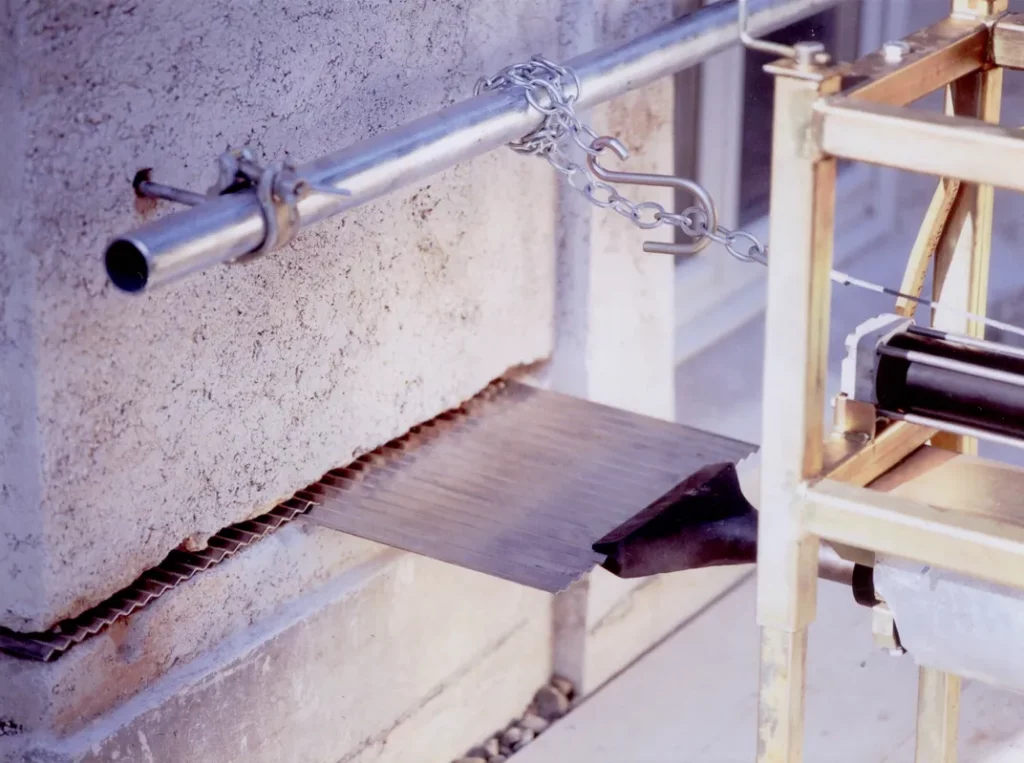
The HW system is a drainage system using a horizontal barrier. In this process, our specially developed stainless steel plates, which overlap at the edges, are driven into the wall. This physical barrier permanently and reliably interrupts the capillary rise of moisture from the substrate. Above the barrier, the rising water simply evaporates from the masonry. This method is considered the safest and long-term solution for wet walls and is suitable for both basements and living spaces.
Our 1.5 mm thick stainless steel panels are particularly resistant and sharpened at the front edges, which is why they can be inserted gently and efficiently into the wall. The wall does not have to be chiseled open and no substance removal is necessary with our HW process. Specially developed pneumatic hammers, with which strong vibrations and shocks can be avoided, also ensure gentle drainage.
Building-friendly process
The HW method is particularly gentle on walls and buildings. No substance is removed and the force flow of the wall is not interrupted. This prevents cracks and other damage to the masonry.
Sustainable solution with a guarantee
Our partners install a horizontal barrier using stainless, acid-resistant, particularly durable steel plates of the highest quality. This horizontal barrier will reliably keep your masonry dry for many years. We guarantee this.
Versatile application
The HW system is basically compatible with all walls with bed joints and with a wide variety of building materials - whether brick, tuff, sand-lime brick or even natural stone. Even thick walls (up to 1 m) can be drained using the HW horizontal barrier.
No use of chemicals
With the HW method, the wall is dried using a purely mechanical horizontal barrier (the overlapping stainless steel plates). Chemicals are not used in this type of drainage - good for you and the environment.
The buildings whose walls were drained using the HW system speak for themselves:
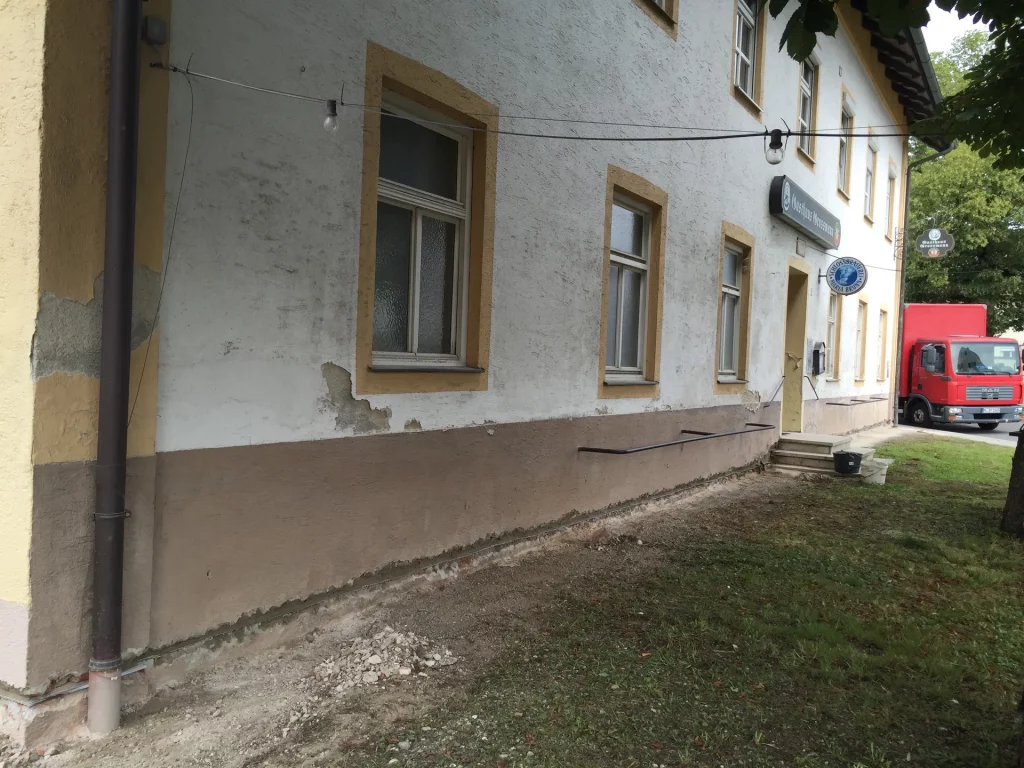
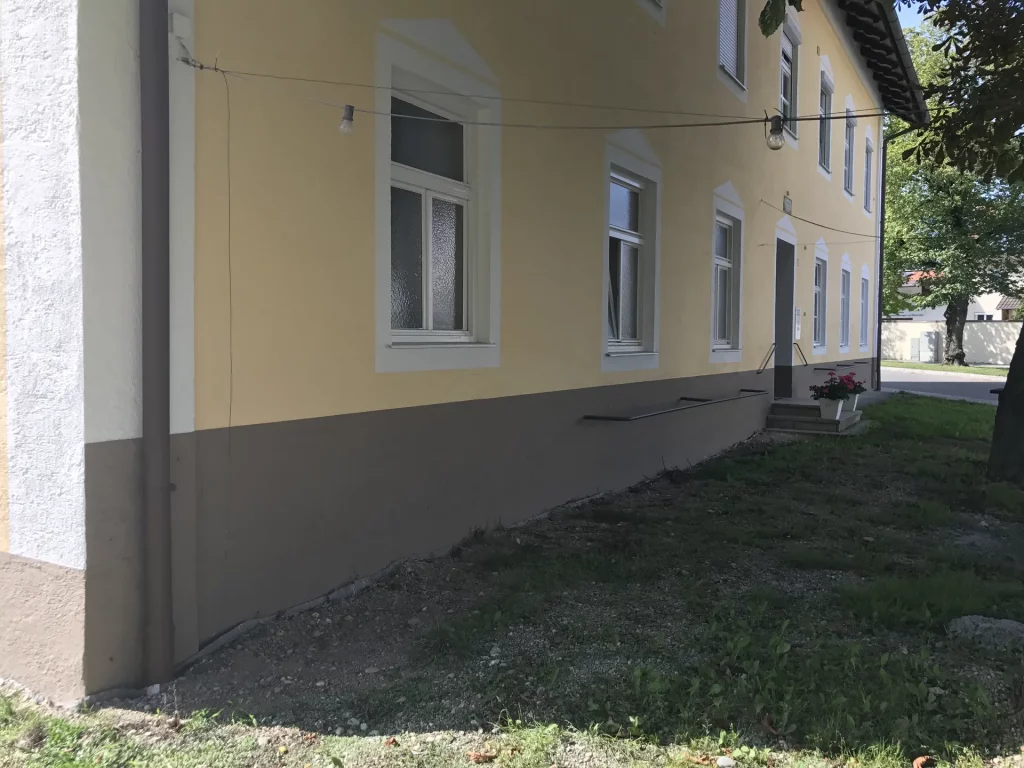
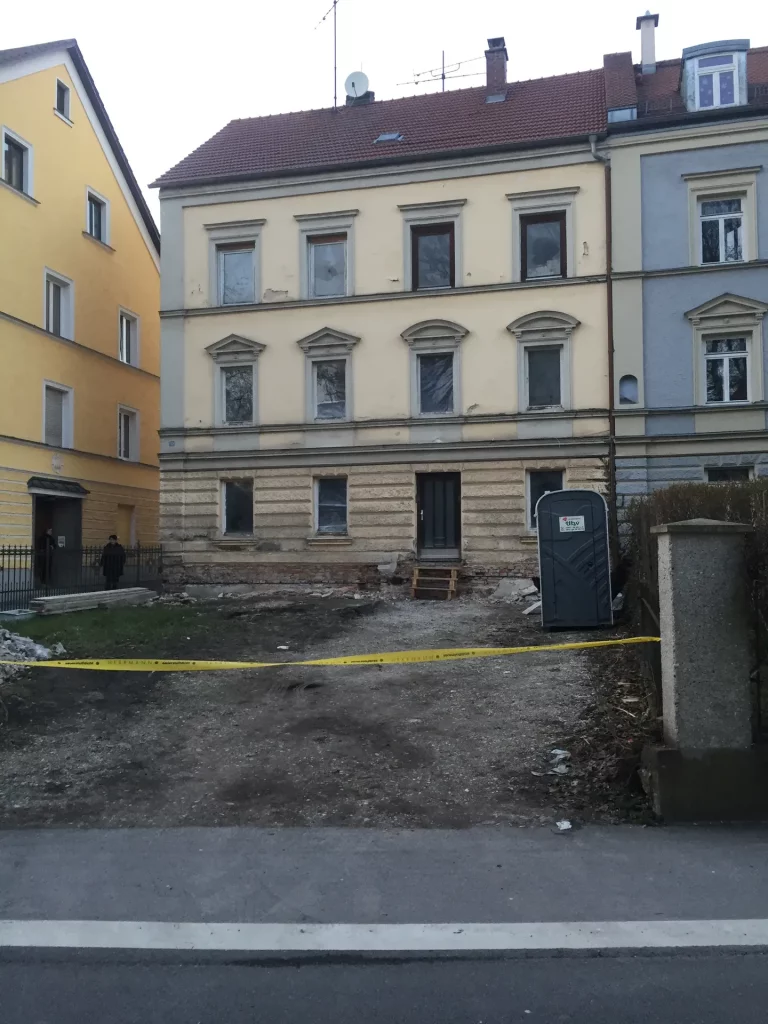
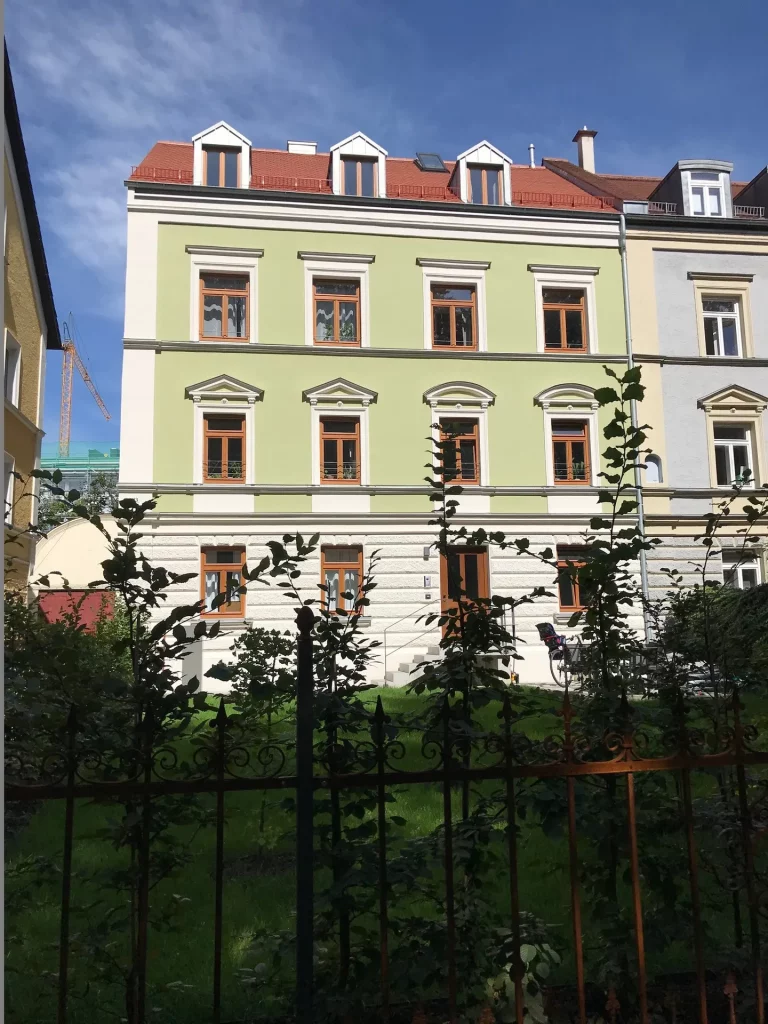
Wall drying pays off in the short and long term
Do you have wet walls in your living space? Then you should not hesitate and hire a HW partner company for a renovation. Professional wall drying is an investment that pays off in the short and long term.
Protect health
Water in masonry encourages the formation of mold, dry rot, rot and other pests that pollute the air we breathe and can damage your health in the long term. Wall drying is the basis for mold removal and mold prevention. They create a more pleasant indoor climate, ensure better breathing air and lower humidity and significantly improve your quality of life.
Reduce heating costs
A wet wall significantly loses its thermal insulation capacity. The small cavities in the building fabric play an important role in thermal insulation - but if they are filled with water instead of air, the thermal insulation is drastically reduced. This is why cold and damp is a typical sign of moisture in the masonry. Drainage improves the thermal insulation of your building and saves heating costs.
Improve appearance
Damp in masonry can be seen in unsightly visual signs such as falling plaster, dark stains, damp edges and saltpetre. Remediation on the surface is usually ineffective or offers only a limited solution, as the problem lies deeper in the masonry. Only wall drying with subsequent renovation will ensure permanently beautiful walls and attractive facades that you can enjoy for many years to come.
Increase property value
Damp walls are a real nuisance for many homeowners - because they significantly reduce the quality of your property and the value of the building. Water damage such as wet walls affect the stability of the building, are visually unattractive and often indicate other problems such as mold, polluted indoor air and poor thermal insulation. Drainage and subsequent renovation will significantly increase the market value of your building.
Moisture in the walls - Further questions and answers
What are the causes of damp walls?
There are many different causes of wet walls. The most common cause is a lack of or defective waterproofing, allowing water to rise capillary from the substrate into the wall. In modern buildings, the masonry is insulated from the environment. However, in older buildings, this waterproofing is sometimes completely missing or defective.
Most building materials - including bricks, sand-lime bricks, filler and many more - are porous. They have small cavities that are normally filled with air. However, if the wall comes into contact with water, the building materials become saturated - similar to a sponge. The moisture rises capillary from the bottom to the top of the wall.
The first step in wall drying is therefore to find the cause of the moisture in the wall and eliminate it. Whether in the basement or in living spaces - our HW horizontal barriers interrupt the moisture supply from the substrate so that water can no longer rise capillary. This keeps your walls reliably dry for many years.
What costs can I expect for wall drying?
The cost of wall drying depends on many different factors - for example, the size, condition, degree of moisture penetration, building material, type of wall, etc.
Our HW partners will carry out a precise inventory on site and inform you of the costs involved. The costs for wall drying may vary slightly depending on the partner company.
Why do our partners like to offer the mechanical process with our HW stainless steel barrier in their services?
Because they are convinced that this is the most efficient way to rid your home's brickwork of moisture and protect it forever.
Do you still have questions?
You may find the answer in our FAQ.
Our work speaks for itself: once dried, never again damp walls!
Our customers are happy to recommend us.
See for yourself and gain an insight into our projects & services.
FAQs - Frequently asked questions
A permanent seal using a stainless steel horizontal barrier.
Yes, because the mechanical barrier eliminates at least the proportion of moisture that rises by capillary action. Above the barrier layer, diffusion-open building materials and moisture-resistant materials are generally used.
Yes, the barrier permanently blocks rising soil moisture.
Yes, in combination with intact vertical insulation.
The horizontal barrier is applied to the masonry in a single work step. This creates a continuous barrier layer.
Yes, because stainless steel does not require maintenance.
Well over 50 years. We know this from experience, as we have been drying walls with stainless steel since 1975.
Yes, because without chemical substances.
This can be useful if the water pressure is high.
Yes, after installing the lock.


