

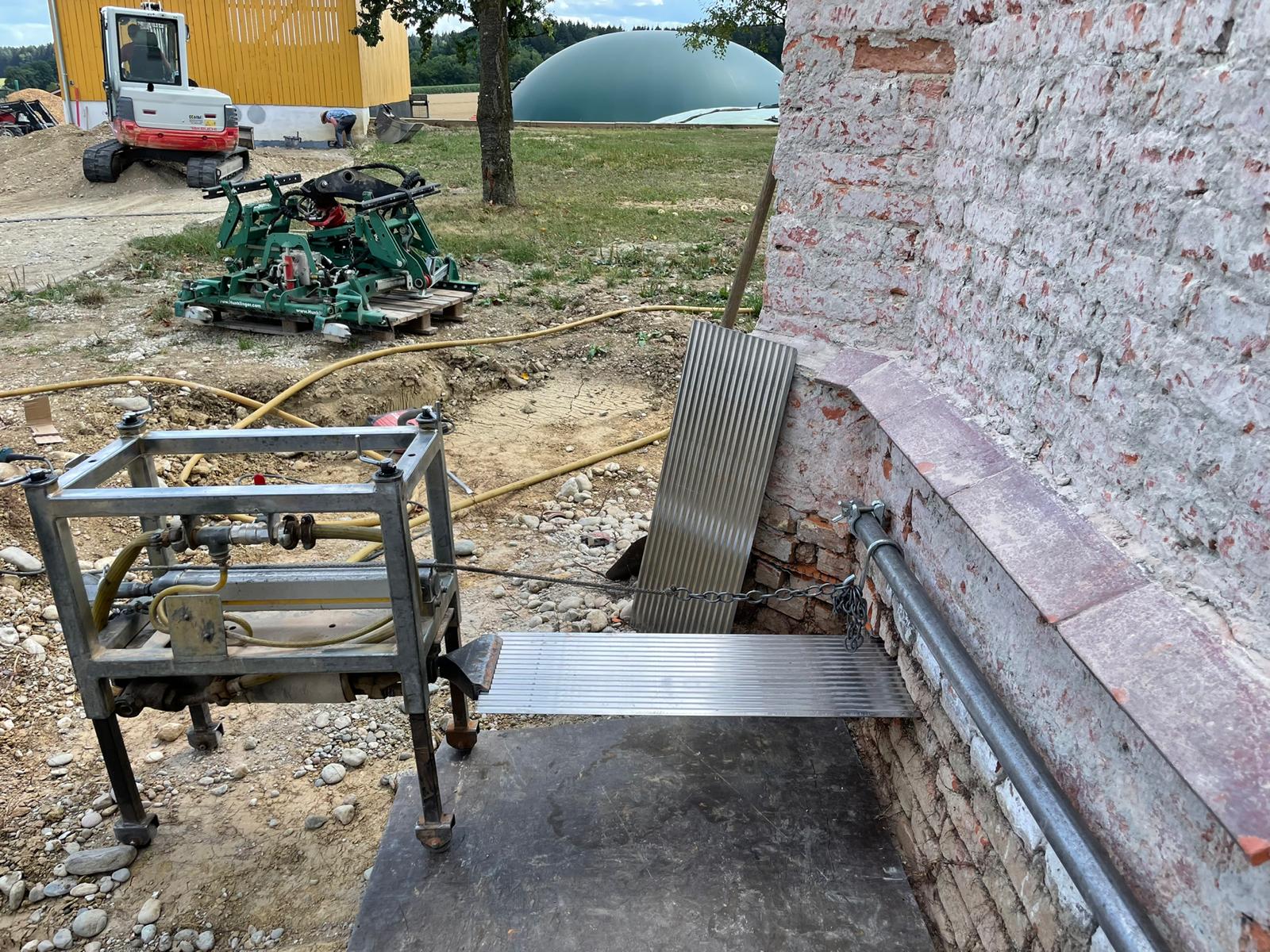
Horizontal barrier in old buildings
HW horizontal barrier - durable & without chemicals
If there is no horizontal barrier in the house or if it is defective, moisture can rise capillary from the ground. If this is the cause of damp walls, a horizontal barrier is a permanent and chemical-free solution for drying out walls.
What is a horizontal barrier in an old building?
A horizontal barrier is a horizontal barrier layer in the masonry. Its task is to prevent rising ground moisture or water from migrating upwards through the fine capillaries in the wall. In new buildings, this form of waterproofing is state of the art. In older buildings, however, it is often missing completely or has become damaged over the decades.
If there is no functioning barrier, the moisture from the foundation draws into the wall and rises upwards bit by bit. This not only damages surfaces. Bricks, joints and the entire indoor climate also suffer from permanent moisture penetration.
Why is the horizontal barrier so important in old buildings?
Many old buildings were made of brick and are therefore particularly sensitive to rising damp. Due to the construction method used at the time, there is usually no waterproofing at all.
A functioning horizontal barrier is crucial for protecting the building fabric and preventing damage caused by water ingress.
In this way, you maintain the value of your property, ensure a healthy indoor climate and save costs in the long term.
How to recognize a defective or missing horizontal barrier
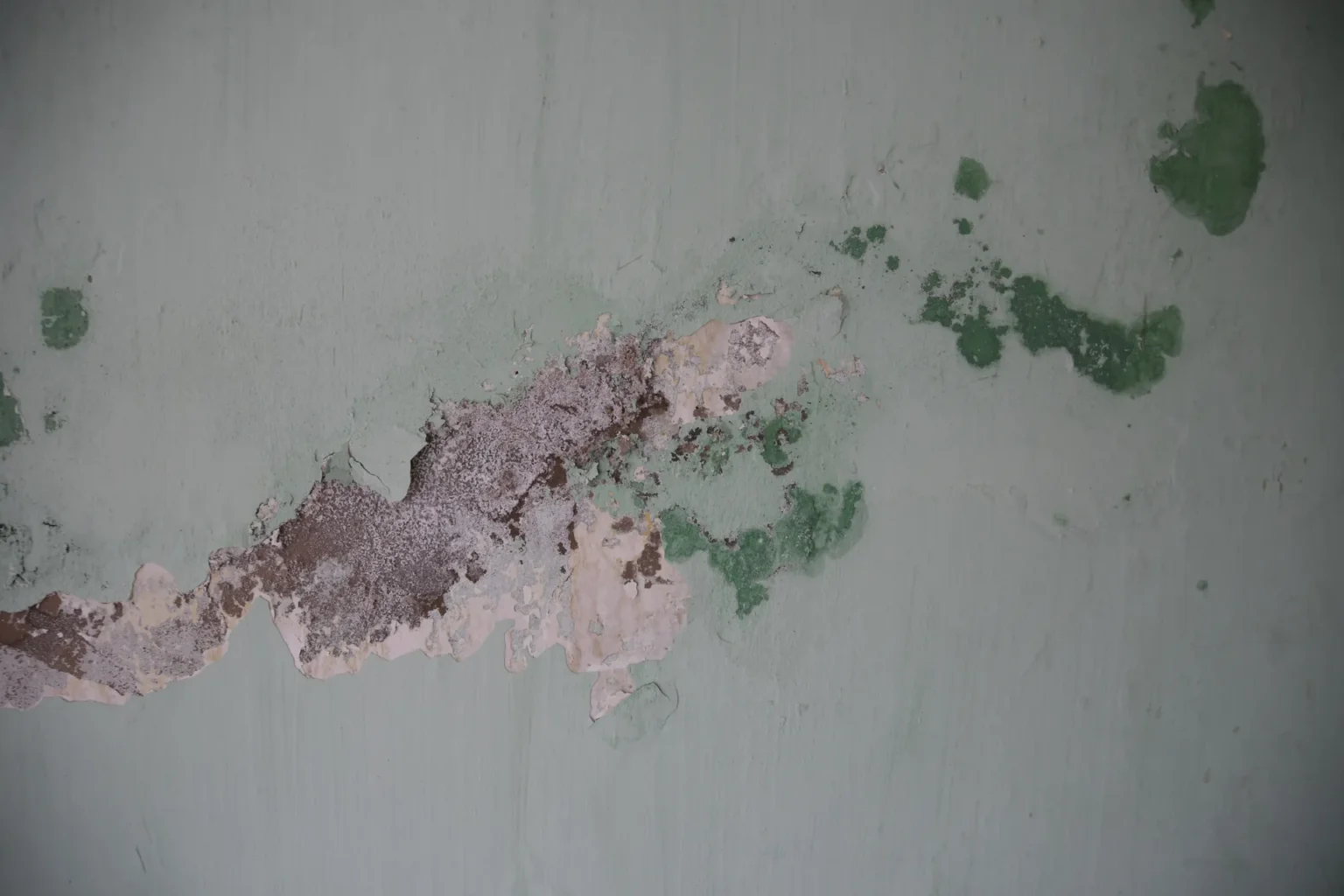
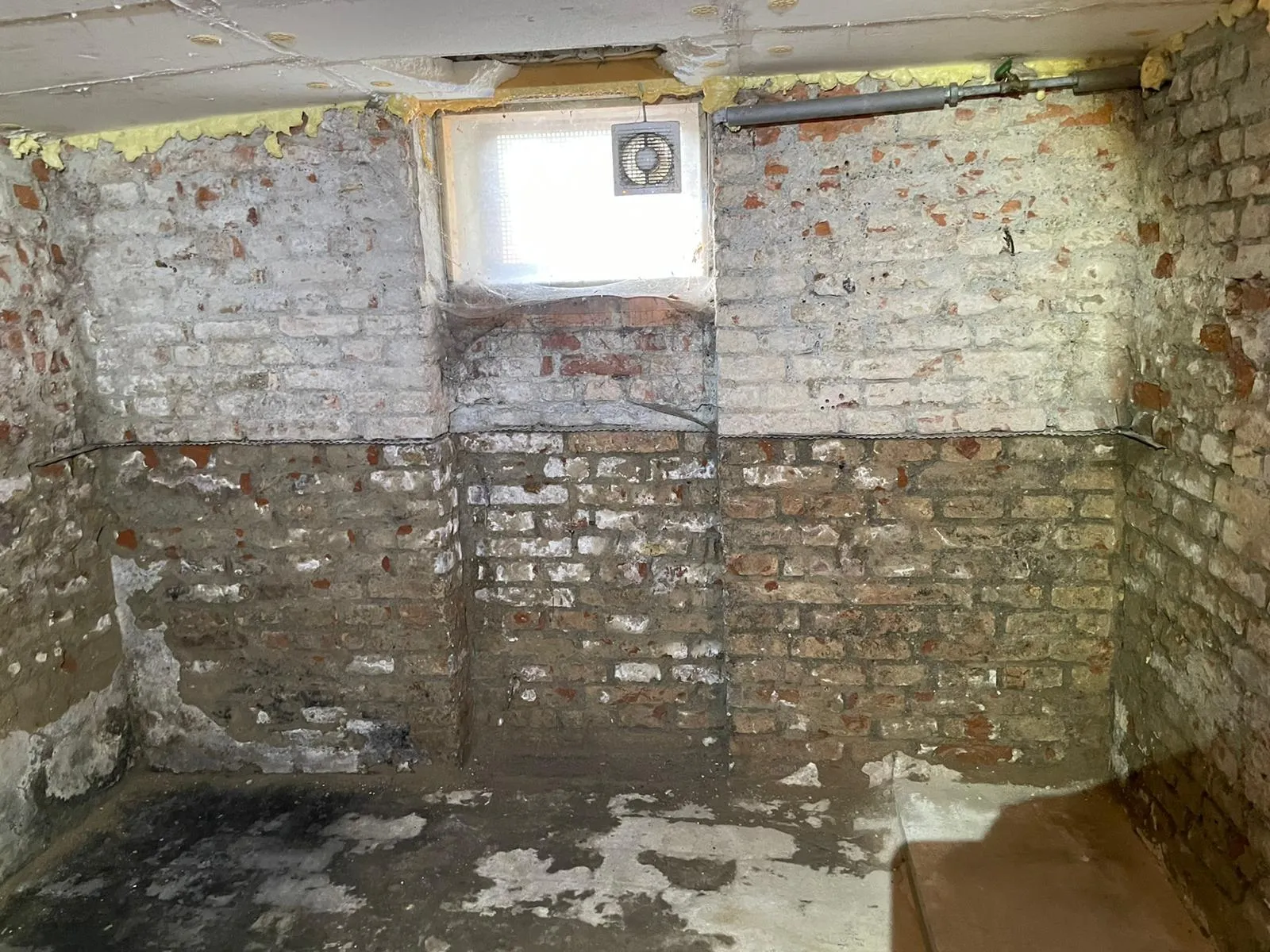
In the case of a damaged or non-existent horizontal barrier, the moisture shows from the bottom upwards. The damage pattern is often typical: damp zones, discoloration or loose plaster appear in the lower wall area.
Typical signs and consequences of a missing horizontal barrier in old buildings are
- Damp and clammy walls
- Flaking plaster and crumbling joints
- Musty odor in living rooms or in the cellar
- Mold growth and increased humidity
- Decreasing thermal insulation and higher heating costs
Many owners initially only notice visual damage. In reality, however, this is often due to permanent moisture damage that will not resolve itself without professional sealing. Simply drying, ventilating or painting over eliminates the cause of capillary rising damp.
How does rising damp occur in masonry?
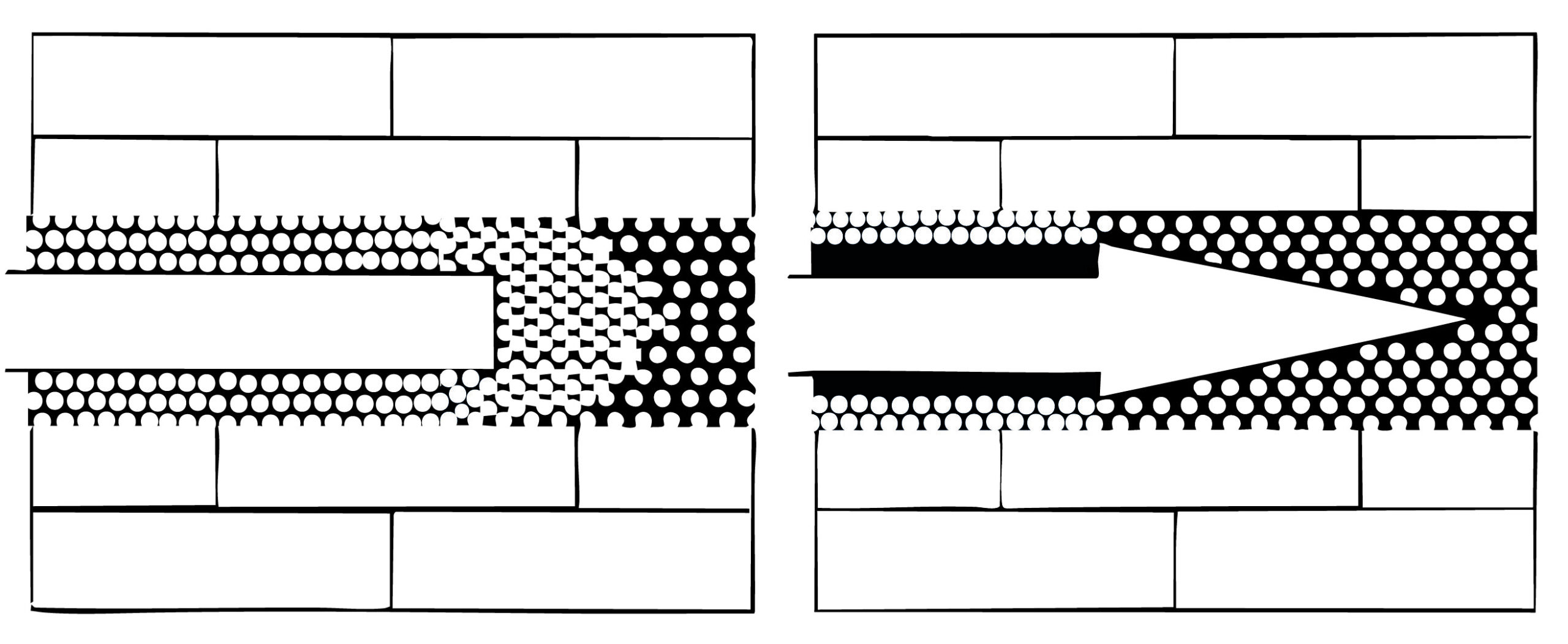
Masonry is not impermeable. It has fine pores, cavities and capillaries. Water can be transported upwards from the ground via these. It is precisely this capillary effect that ensures that moisture in old buildings not only remains in the lower area, but is distributed further into the wall cross-section.
If there is no effective horizontal sealing, this moisture transport remains unhindered. The wall becomes saturated from below. This results in mould, plaster damage and a permanently unfavorable indoor climate. This is particularly problematic in older buildings, whose walls are often already damaged.
Retrofitting a horizontal barrier in an old building
The good news is that a horizontal barrier can be retrofitted in old buildings. The decisive factor here is that the method is suitable for the building fabric and permanently protects the wall against rising damp.
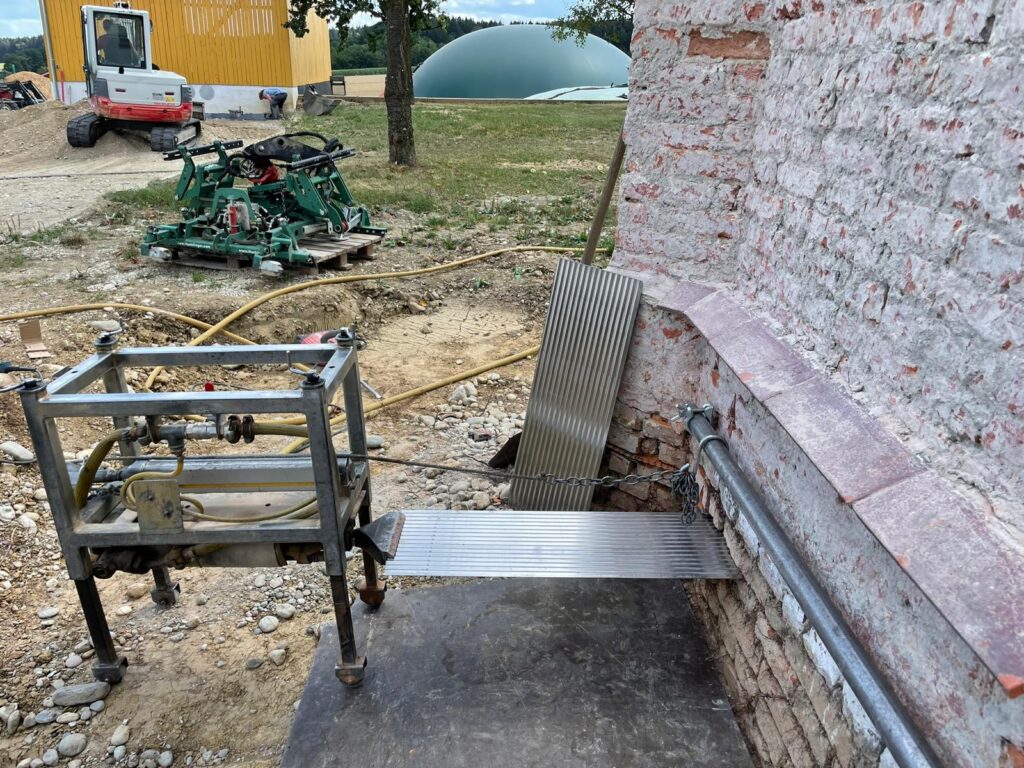
HW Mauertrockenlegung uses a mechanical process with rust- and acid-resistant stainless steel plates. These are shaped in such a way that the impact resistance is reduced and the wall is thus protected. when collecting the lock is protected. The panels are inserted into the horizontal bed joint of the masonry, where they form a barrier layer. This physically interrupts the rise of moisture. The wall can dry out above the barrier.
In contrast to chemical injections, no liquid is injected into the masonry. is applied. It is not necessary to drill into the wall and no chemical agents are used. It is not necessary to repeat the treatment after a few years due to the durability of stainless steel. This makes the mechanical horizontal barrier is particularly interesting for old buildings where a permanent solution is required.
HW wall drying
We work with qualified partner companies in Germany, Austria, the Czech Republic and Slovakia to install the barrier. They use our patented process and our specially developed stainless steel plates. Simply get in touch - we will help you to find the right contact person in your area.
Advantages of the HW horizontal barrier at a glance
The retrospective horizontal barrier from HW Mauertrockenlegung offers you a solution that has been specially developed for permanently dry walls. It is suitable for exterior and interior walls up to 1 m thick.
The horizontal barrier permanently stops capillary rising damp or rising water. The barrier does not need to be maintained even after installation.
The barrier is a mechanical seal. In contrast to many injection methods, the sealing here is chemical-free.
Our HW partners separate and seal the masonry in just one work step. This saves you time, effort and stress.
The HW method is particularly gentle on the wall: no injection, no drill holes and no removal of the building fabric. This also prevents wall settlement.
For which old buildings is a retrofitted horizontal barrier suitable?
A subsequent horizontal barrier is generally required for all older buildings if capillary rising damp has been detected in the masonry. This is particularly common:
- Old buildings without original barrier layer
- Older residential buildings with damp plinth areas
- Wilhelminian style houses
- Existing building with damaged plaster
- Basement (in combination with vertical basement waterproofing)
The prerequisite for the HW procedure is a continuous horizontal bed joint in the masonry. Our partners always check on site whether this is present and which measures make sense in the specific case.
Procedure for HW wall drying
The first step is always to check the situation on site. This is because damp walls can have various causes. A horizontal barrier is only the right measure once it has been established that capillary rising damp is present.
The process is clearly structured:
Simply contact us - we will put you in touch with our partner companies. They will check on site what the exact cause of damp walls is and discuss the next steps with you.
If capillary rising damp is the cause, a horizontal barrier is the right solution. Our partners will assess whether your old building is suitable for the HW method & provide you with transparent information on costs & co.
The stainless steel plates are installed professionally. This creates a durable barrier layer in just one work step. Our patented process and the specially shaped plates are particularly gentle on the wall.
After installation, the masonry above the barrier gradually dries out. The plaster, surface and affected wall areas can then be renovated.
Why you should rely on a professional for horizontal waterproofing in old buildings
There is a lot of general information on the internet about wall drying. In practice, however, every building is different. Particularly in old buildings, the masonry, joint pattern, degree of moisture and existing damage play a major role. Anyone who hastily resorts to the wrong method risks unnecessary costs and lasting problems.
A specialist company ensures that:
- the actual cause is recognized
- the appropriate sealing method is selected
- the procedure is carried out professionally
- the building fabric is protected
- the refurbishment is designed for the long term
A professional horizontal barrier in an old building is not a cosmetic measure. It is the most important step in preserving and protecting your property, because permanent renovation is only possible if the suction effect of the masonry is prevented and the wall can dry out. Before we start, we will inform you transparently about the process and costs so that you can make an informed decision.
HW wall drying - the permanent solution for damp walls in old buildings
HW wall drying is a reliable, mechanical and maintenance-free solution against rising damp. With the patented system of stainless steel plates, horizontal barriers can be retrofitted in old buildings without chemicals and without unnecessary stress on the masonry.
If basement waterproofing is required, we also make sure that the horizontal barriers are combined with intact vertical insulation so that the drainage is permanent here too.
The goal is clear: dry walls, less consequential damage from water and a permanently protected building - from the basement to the upper floors.
