Wall drying Hanover
HW wall drying: Your solution for damp walls
The cause of damp in masonry
Moisture in masonry can be caused by various structural and technical factors. These include burst pipes, leaking pipes, missing or damaged horizontal barriers (especially in old buildings) and inadequate thermal and moisture bridges.
Accordingly, there is no one-size-fits-all solution to moisture in masonry. A professional analysis of the cause of the damage is a prerequisite for determining suitable and sustainable drainage measures.
Do you need individual advice? Please contact us!
Wall drying with the patented HW process
At HW Mauertrockenlegung, we specialize in draining damp walls due to missing or defective horizontal barriers. If this seal is missing or damaged, capillary rising damp from the ground can penetrate the masonry and cause considerable damage in the long term.
For this purpose, we have developed special stainless steel plates with a point on the front edge. These allow them to be driven into the masonry without damaging the wall. In this way, an impermeable and durable horizontal barrier is created.
HW partner in Hanover and Lower Saxony
In Germany, Austria, Slovakia and the Czech Republic, we work with qualified partner companies that use our horizontal barriers and our patented process to dry out walls efficiently and sustainably.
We would be happy to recommend the right partner for wall drying in Hanover or Lower Saxony!
Wall drying pays off several times over
Damp masonry can have a variety of structural and health consequences. These include flaking or crumbling plaster, impaired air quality and rising heating and energy costs. In advanced cases, it can also lead to mold growth.
Professional drainage of damp walls therefore makes sense for several reasons. It makes a significant contribution to protecting the health of the residents, improving the quality of living and the quality of stay and maintaining the value of the property in the long term.
Horizontal barrier for capillary rising damp in walls
If the cause of damp walls is capillary rising damp, a mechanical horizontal barrier is the solution for wall drying in Hanover and Lower Saxony.
Capillary rising damp occurs when water from the ground penetrates into the masonry via the finest pores and capillaries and continuously spreads upwards.
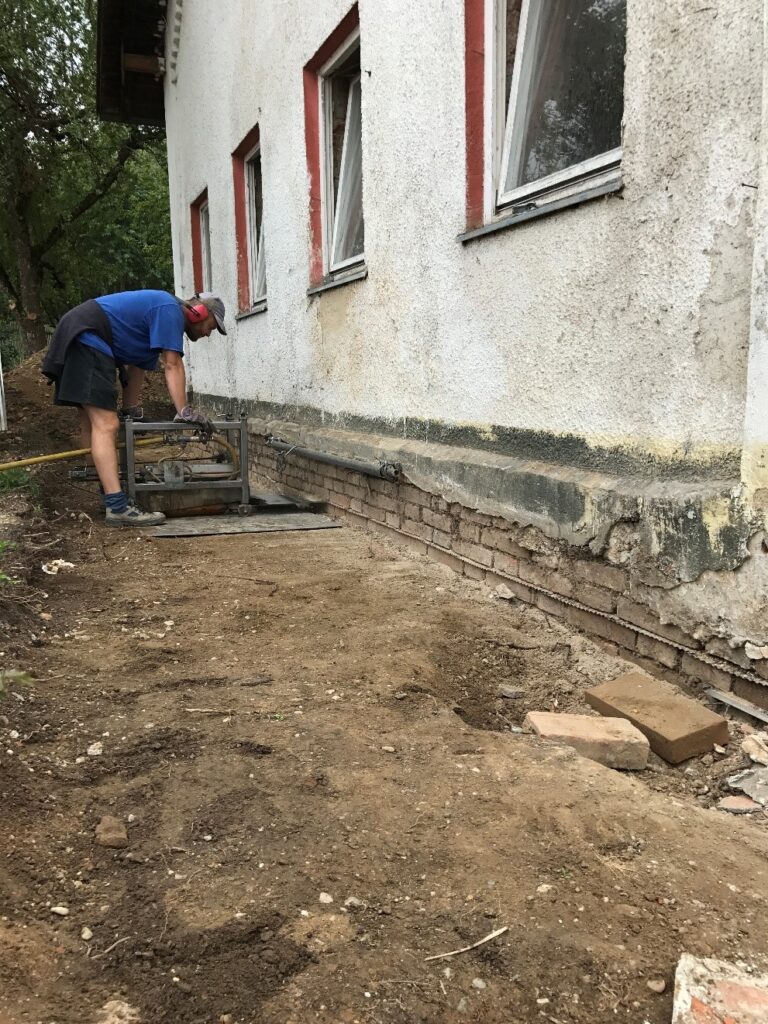
A horizontal barrier is driven into the masonry close to the ground, thus forming a mechanical barrier and interrupting capillary rise. In this way, the masonry above the barrier remains permanently dry and is sustainably protected against renewed moisture penetration.
How does capillary rising damp occur?
Capillary rising damp is caused by the physical properties of mineral building materials. Materials such as bricks, concrete or natural stone have fine pores (capillaries) which - like a sponge - can absorb water from the soil and transport it further.
As soon as these pores come into contact with soil moisture, the water is transported into the masonry by capillary suction. As a result, the moisture rises continuously and is distributed within the wall. Without effective sealing, this water transport cannot be interrupted. In the long term, this leads to complete moisture penetration of the building fabric.
For this reason, a horizontal barrier is integrated as standard in new buildings as a barrier against rising damp. In old buildings, however, this seal is often missing, defective or no longer meets today's technical requirements.
Specialist company for wall drying in Hanover
We recommend having a professional specialist company carry out masonry drying using a horizontal barrier. Only they have the specialist knowledge and the necessary equipment.
Finding the right company can be very challenging. It is important that the provider:
- carries out a detailed damage analysisto find the cause,
- Individual and property-specific refurbishment measures defined and does not offer blanket standard solutions,
- submits a transparent, comprehensible offer, in which all costs are clearly shown.
At HW Mauertrockenlegung, we work with partners in Germany (including Hanover, Lower Saxony) and Europe who carry out wall drying in Hanover using our certified stainless steel panels and our proven process. Each of these partners carries out a damage analysis, offers differentiated solutions and provides transparent quotations. In this way, we ensure technically flawless and permanently effective masonry drying.
Contact us at any time - we will be happy to answer all your questions and put you in touch with one of our Partner near you!
Why drainage with the HW horizontal barrier?
HW-Mauertrockenlegung stands for sustainable and permanently effective solutions for wall drying in Hanover and throughout Lower Saxony. Based on many years of practical experience, we have developed our own patented process that enables technically reliable drying that is gentle on buildings.
Masonry drying in Hanover is carried out by qualified partner companies from Germany. Only the original, patented stainless steel plates and the patented HW-Mauertrockenlegung process are used.
Together with our partners, we focus on the following aspects:

One work step
Our system enables separation and sealing in just one work step. This reduces time, costs and intervention in the building fabric.

Gentle on buildings
The HW stainless steel plates are gently driven into the masonry. This prevents cracks from forming and the static force flow of the wall is never interrupted during the work.

Maintenance-free
The HW horizontal barrier consists of rustproof and corrosion-resistant stainless steel plates. These are installed overlapping and form a permanently closed barrier layer that requires no maintenance.

Chemical-free
The HW process is based on purely mechanical masonry drying. The use of chemical injection agents is completely eliminated. It is also not necessary to drill holes in the masonry.

Retrofitting possible
The horizontal barrier can be easily integrated into existing buildings at a later date. It can also be used in old buildings.

Effective
The process can even be used on building structures that are already heavily saturated with moisture without any preliminary drying work and permanently prevents capillary moisture transport.

Also as basement waterproofing
In combination with a vertical barrier, the horizontal barrier is also suitable for basement waterproofing and for protecting components in contact with the ground.

Even for thick walls
Even walls with a thickness of up to 1 m can be drained using our process.
Procedure for wall drying in Hanover
Professional wall drying in Hanover is the basis for permanently dry masonry. Our aim is to permanently stop capillary rising damp and protect the building fabric in the long term. The process is divided into the following steps:
1. detect moisture
Damp masonry is often indicated by dark discoloration, flaking plaster, salt efflorescence or mould growth. These signs indicate increased moisture penetration of the wall and should be investigated at an early stage. We have summarized all the signs for you here:
2. contact & damage analysis
Contact us at an early stage if you suspect moisture damage. We will put you in touch with a qualified specialist partner in your region who will carry out a detailed damage analysis. This will determine the cause, extent and progression of the moisture penetration in order to determine the appropriate method of wall drying.
3. installation of the horizontal barrier
If capillary rising damp is identified as the cause, a mechanical horizontal barrier is installed using the patented HW method. The horizontal barrier is installed in a single work step and is gentle on the walls.
4. renovation
After successful wall drying in Hanover and complete drying of the masonry above the barrier, renovation measures can be carried out. These include new plastering, painting or other surface treatments. The installed horizontal barrier is maintenance-free and offers lasting protection against renewed moisture penetration.
Before and after comparison
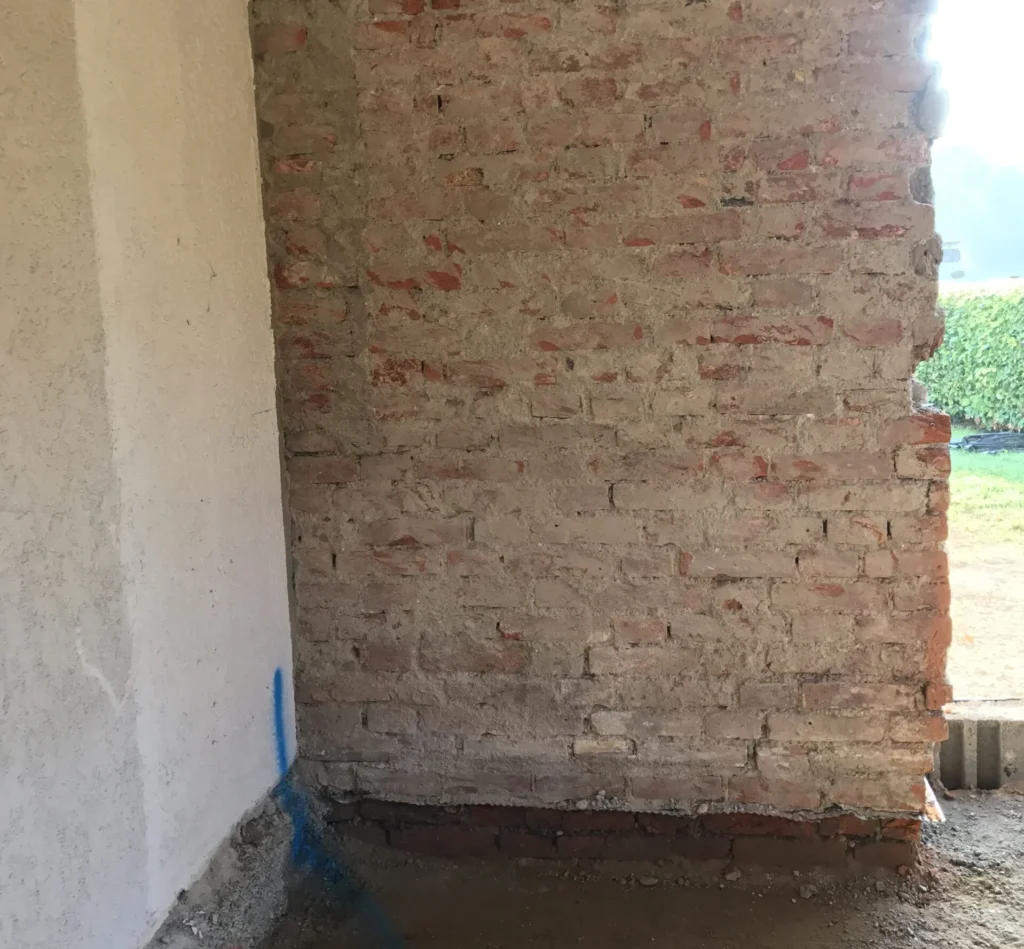
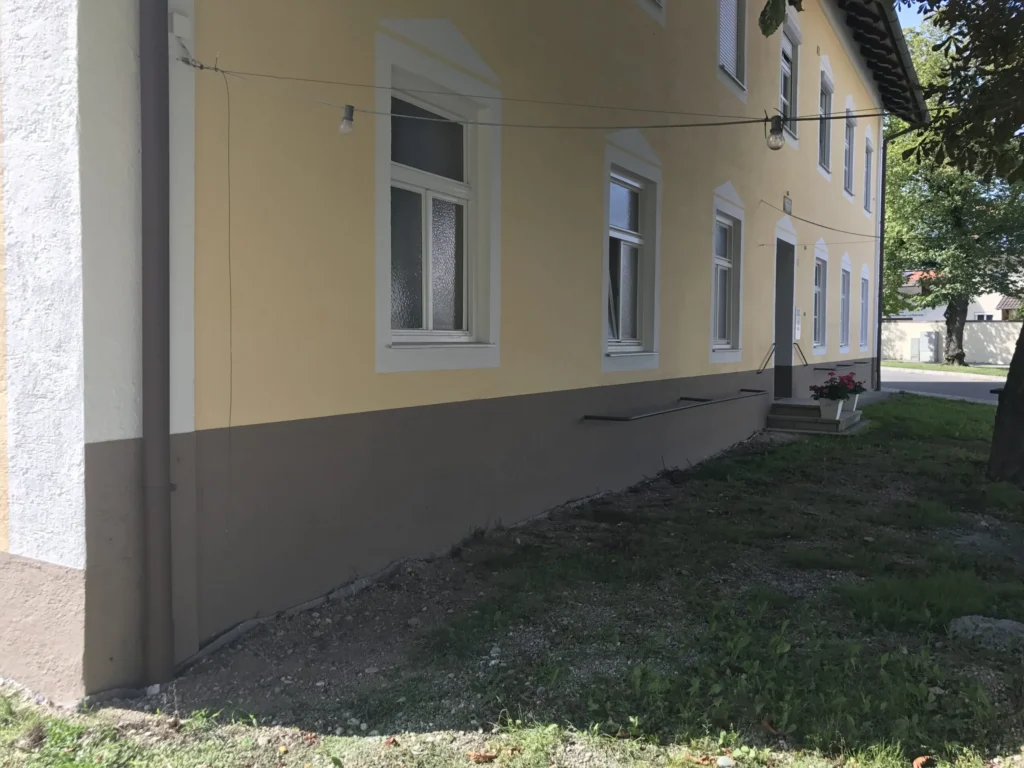
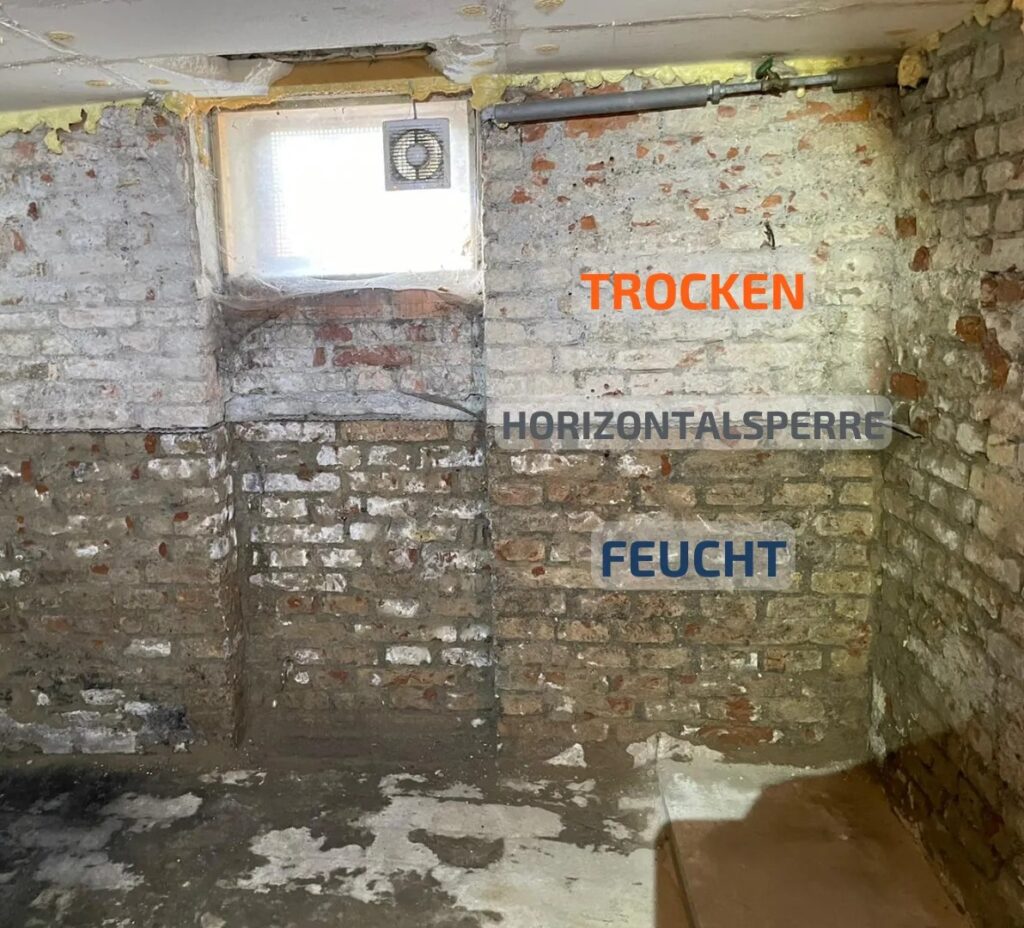
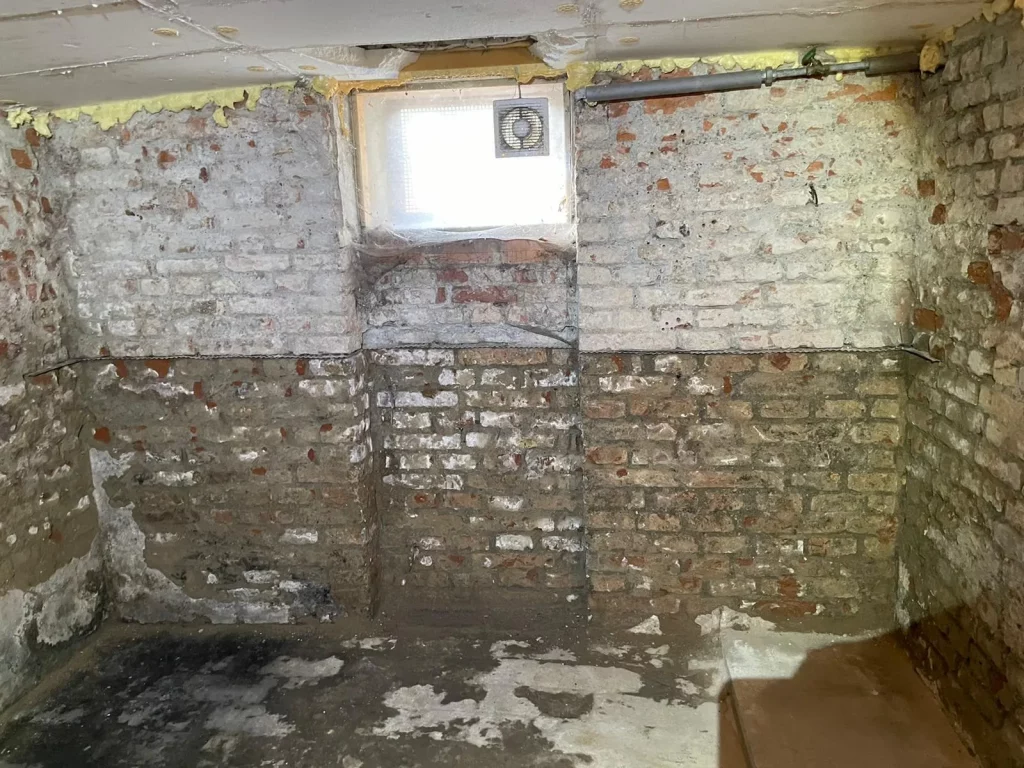
After professional masonry drying, the masonry above the horizontal barrier dries visibly. The result is clearly visible: the area below the barrier remains dark, while the section of wall above is light, dry and permanently protected.
Refurbishment as the final measure
After professional installation of the horizontal barrier for waterproofing and masonry drying, a sufficient drying phase is required. The affected wall areas must be allowed to dry completely before further renovation and construction work can be carried out. Only then can the renovation be carried out.
The extent of the renovation work depends on the individual condition of the masonry and the degree of previous moisture penetration. In practice, the following measures are used, among others:
- Repair and renewal of damaged mortar joints
- Renewal of the wall plaster (barrier or sealing plaster in the exterior base area)
- Professional paint coating
Before the refurbishment
After the refurbishment
We will be happy to advise you on the necessary accompanying and follow-up measures, which are usually carried out in cooperation with a specialist company on site. We will be happy to put you in touch with one of our HW partners in Germany & Lower Saxony.