Wall drying Upper Austria
HW wall drying - long-term solution for damp walls
HW wall drying in Upper Austria - durable, gentle on walls, efficient
Wall drying is not only an investment in your property, but also in your quality of life. Moisture in the walls impairs the stability of the walls, reduces the value of the property, causes increased heating costs due to poorer thermal insulation, increases humidity, encourages the formation of mold and can damage your health in the long term. You can avoid all of this by having professional wall drying carried out.
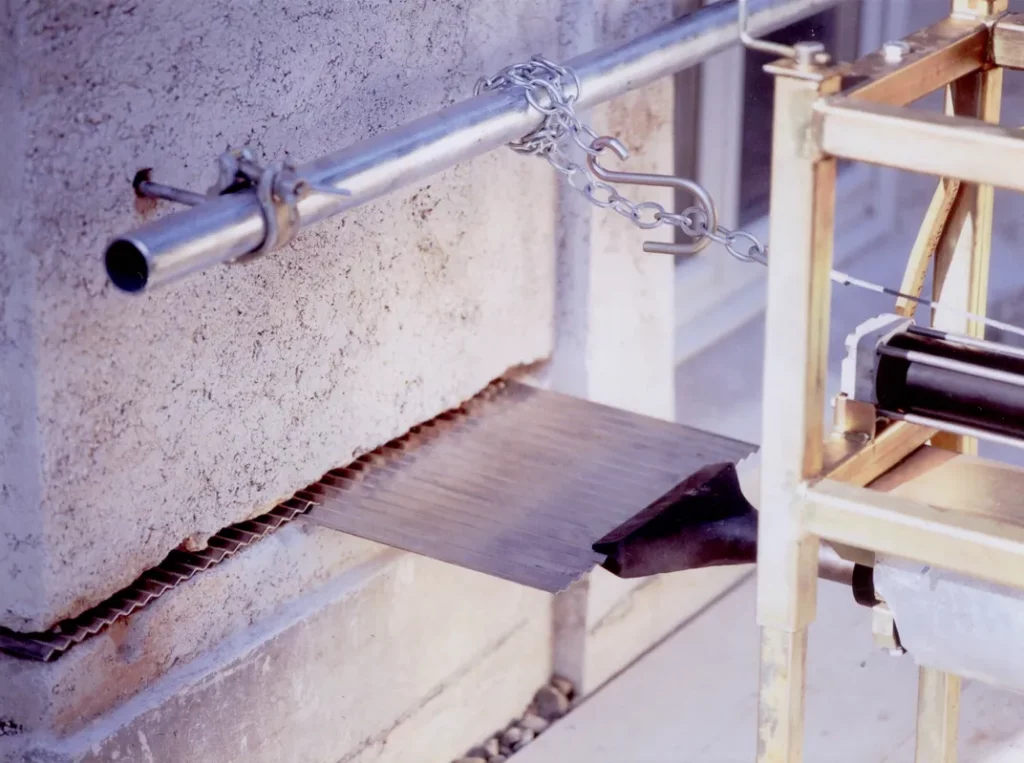
With 50 years of experience and 35 partner companies throughout Europe, HW-Mauertrockenlegung stands for quality, competence and expertise. With our specially developed process, in which rust-free stainless steel plates are gently driven into the masonry and form an impenetrable horizontal barrier, we and our partners enable the safe and long-term drying of damp walls - with a guarantee.
One work step is enough
Our HW partners carry out wall drying in just one operation. The wall is separated and insulated at the same time. This minimizes the time and effort required by the renovators.
Gentle and safe
During drainage, the flow of force in the wall is not interrupted at any time and no substance is removed from the joint. This prevents cracking and further damage.
Permanent solution
Our panels are made of stainless steel - a specially developed, rustproof and highly resistant metal of the highest quality that reliably and permanently protects your masonry from capillary rising damp.
Process without chemicals
Drainage is achieved by means of a mechanical, impermeable barrier in the masonry, which stops the moisture from rising. In contrast to other methods (e.g. the injection method), no chemical agents are required.
How to recognize that wall drying is necessary
- The plaster is falling off the walls
- Moisture edges
- Dark spots
- Salt efflorescence (saltpeter) or even mold
- Musty smell
- Cold and clammy in the cellar or living area
The most common cause of these signs: Moisture rising in the walls.
Whether cellar or living space - quick action is required for damp walls. The damage to the masonry should be repaired quickly and the increase in moisture should be stopped. This will prevent peeling plaster, mold and the resulting air pollution from becoming an issue in the first place.
Do not hesitate and take Contact to us. Our HW partners in your region offer you a refurbishment of the highest quality.
Maintain the value of your building
Damp walls are a common cause of the destruction of brickwork and thus a reduction in the value of the building. With our method of wall drying, you can prevent the cause of wall destruction - namely capillary rising damp from the subsoil - for decades.
Protect your health
With wall drying, you can prevent the formation of mold or dry rot, ensure better air quality indoors and protect your furnishings and objects from infestation by these pests. This improves your quality of life in the cellar or living space and protects your health.
Reduce heating costs
Damp masonry has poorer thermal insulation than dry masonry. Moisture absorption of 4 % can already reduce thermal insulation by 50 %. This means that wall drying can significantly reduce your heating costs.
Your partner for wall drying in Upper Austria
Your walls are in the best hands with the experts at HW-Mauertrockenlegung. We offer our services to customers in Upper Austria, Vienna, throughout Austria and in many European countries.
Simply take Contact and we will forward you to one of our partner companies in your immediate vicinity.
The typical cause of damp walls: capillary rising water
Damp walls and masonry are not uncommon. Bricks, mortar, sand-lime bricks and many other building materials are porous. They consist of a network of fine capillary vessels and can soak up water like a sponge.
There are many causes of damp in walls. In addition to water damage such as burst pipes, the most common cause is water that rises from the subsoil into the masonry. The moisture is absorbed by the pores in the building fabric and rises from the bottom to the top of the masonry.
In the vast majority of cases, remedial work on the surface is ineffective in the case of damp walls. Only professional wall drying can solve this problem - and prevent moisture from rising again.
Take Contact with us. We make sure that your walls get dry - and stay dry.
Say goodbye to damp walls
Thanks to our patented process, you can say "goodbye" to damp walls once and for all.
Our HW partners use our patented HW system to permanently and reliably dry out walls in Vienna, Austria and internationally. To do this, they install a thin but impenetrable horizontal barrier in the wall using specially developed, overlapping stainless steel plates that prevent the capillary rise of moisture. As there is no longer a constant supply of moisture, the wall above the horizontal barrier by evaporation - and remains permanently dry.
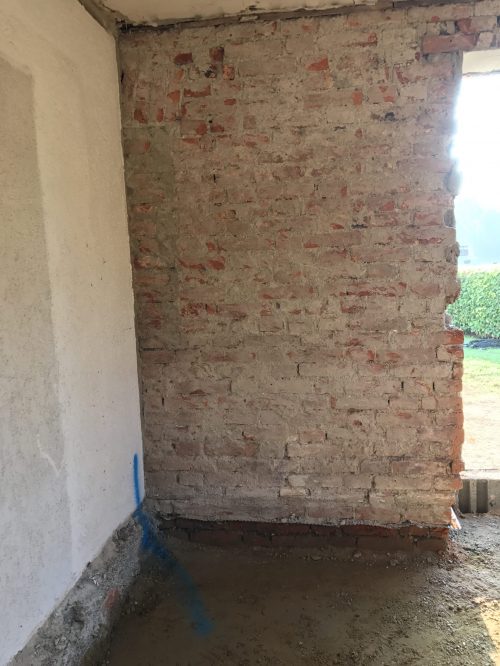
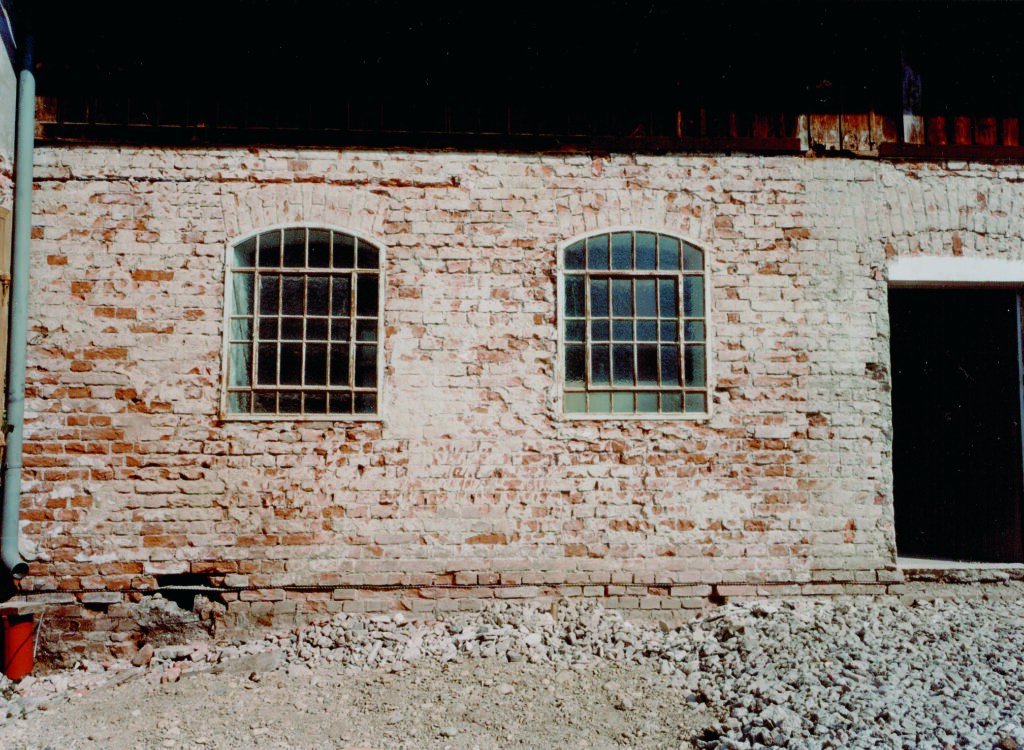
See for yourself:
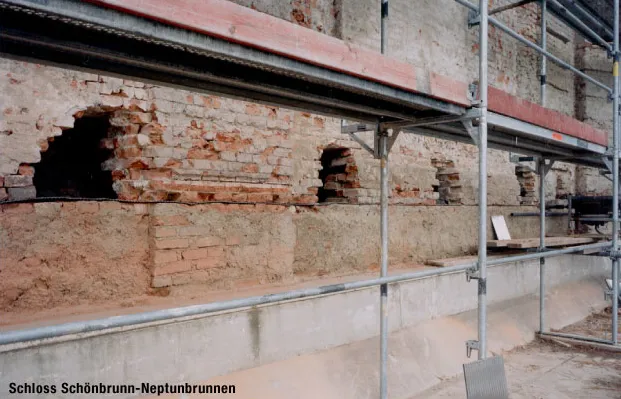
Before
Afterwards
The mechanical method of wall drying using a horizontal barrier is generally considered to be the safest and is suitable both for masonry in basements (if a functioning vertical barrier is installed) and in habitable rooms.
The special feature of the HW system: Our stainless steel plates are tapered like arrows at the impact edges, which is why they can be driven in particularly efficiently. The high number of blows (approx. 1200 blows/minute) with which the plates are driven in minimizes strong vibrations and shocks - particularly gentle on your masonry and your property.
In contrast to the injection method, the mechanical horizontal barrier installed by our partners does not remove any building fabric from the wall. Another difference between the injection method and the mechanical method: The injection method uses a chemical water-repellent filler. This is completely dispensed with in the mechanical method.
FAQs - Frequently asked questions
Wall drying permanently stops rising damp in the masonry. With the HW system, a mechanical horizontal barrier made of stainless steel plates is installed, which reliably prevents the capillary rise of water.
Special stainless steel plates are inserted into a bed joint in sections. This creates a continuous mechanical barrier layer that permanently blocks moisture.
Because the capillary rise is completely interrupted by a mechanical barrier. It works immediately, is permanent and independent of the degree of moisture penetration in the masonry.
Installation is carried out in sections and is usually completed within a few days. The masonry can then dry out.
If there are signs of moisture such as stained plinth areas, salt deposits or flaking plaster.
Yes, if the horizontal barrier is connected to the vertical insulation of the wall on the slope side.
No, with our method the load-bearing capacity is maintained at all times, as no masonry is removed and the flow of forces in the wall is never completely interrupted.
Yes, because the joint material is compacted when the barrier is driven in. This prevents settlement cracks from occurring.
Stainless steel is corrosion-resistant and durable, ensuring a lasting seal.
Only if the part in contact with the ground has no intact vertical insulation to which the horizontal barrier is connected.