Chrome steel sheet process

Chrome steel sheet process

Chrome steel sheet process

Mechanical horizontal barrier against rising damp

Permanent

Permanent solution for dry walls

Damp walls, flaking plaster, salt efflorescence or musty room air are often indications of capillary rising damp. Old buildings in particular often lack a functioning horizontal barrier. As a result, water can rise capillary from the ground into the masonry and cause long-term damage to the building fabric, indoor climate and thermal insulation.

Das Chromstahlblechverfahren (umgangssprachlich auch Edelstahleinschlagverfahren) ist eine mechanische Methode zur nachträglichen Mauertrockenlegung. Dieses wurde von den Gründern von HW-Mauertrockenlegung (Dipl. Ing. Haböck und Dipl. Vw. Ing. Weinzierl) erfunden und patentiert, weshalb dieses Verfahren auch als HW-Verfahren oder Mauertrockenlegung nach dem HW-System bezeichnet wird.

Dabei wird eine dauerhafte, mechanische Sperrschicht aus Edelstahl in das Mauerwerk eingebracht. Diese Sperre unterbricht den kapillaren Feuchtigkeitsaufstieg und verhindert, dass Wasser weiter nach oben in das Mauerwerk transportiert wird.

HW-Mauerrockenlegung has developed its own process for this with specially developed stainless steel plates and suitable impact equipment. The work is carried out by trained HW partner companies.

How it works

How does the chromium steel sheet process work?

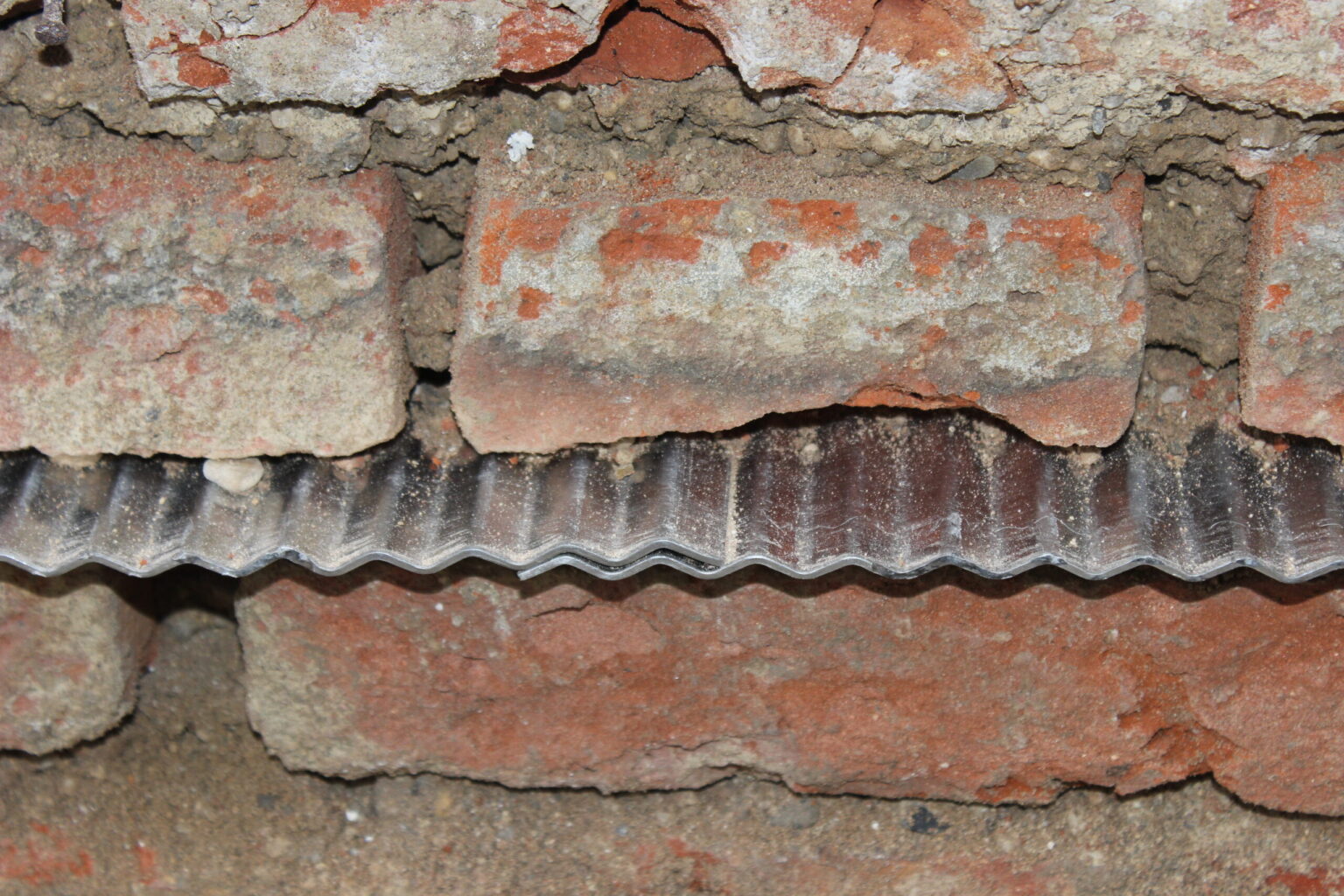
Bei der patentierten  Originalausführung werden gewellte Edelstahlplatten in eine durchgehende Lagerfuge des Mauerwerks eingetrieben. Die Platten überlappen sich seitlich und bilden dadurch eine durchgehende Sperrebene. Diese Ebene trennt den oberen Wandbereich dauerhaft vom feuchten unteren Mauerwerksbereich.

After installation, the masonry above the barrier can dry out. This improves the indoor climate, thermal insulation and quality of living. At the same time, further moisture damage is prevented.

Further renovation measures (e.g. plaster renovation) are then possible.

Setzen Sie auf das Original! Der Begriff „Chromstahlblechverfahren“ wird als allgemeine Bezeichnung für Verfahren zur nachträglichen Horizontalabdichtung mittels Edelstahlblechen verwendet. In Ausschreibungen und Leistungsverzeichnissen werden häufig solche technischen Bezeichnungen verwendet, um die Leistung unabhängig von bestimmten Marken oder Herstellern zu beschreiben.

Das Original dieses Verfahrens ist das HW-Verfahren, dessen Bezeichnung auf die Erfinder Dipl.-Ing. Herwig Haböck und Dipl.-Vw.-Ing. Bruno Weinzierl zurückgeht, die diese Technologie entwickelt, patentiert und auf dem Markt etabliert haben.

Mit HW-Mauertrockenlegung und unseren Partnerfirmen setzen Sie bei der Trockenlegung Ihrer Wände auf das Original-Verfahren, auf langlebige Materialien und auf eine effektive Lösung.

Separating & sealing

HW chromium steel sheet process: Cutting & sealing in one work step

Beim originalen, patentierten HW-Verfahren werden rost- und säurebeständige Edelstahlplatten mit speziellen pneumatischen Schlaggeräten in das Mauerwerk eingetrieben.

Unlike two-stage processes, the masonry does not have to be sawn open first and then sealed. With our HW method, cutting and sealing are carried out in a single work step. As a result 

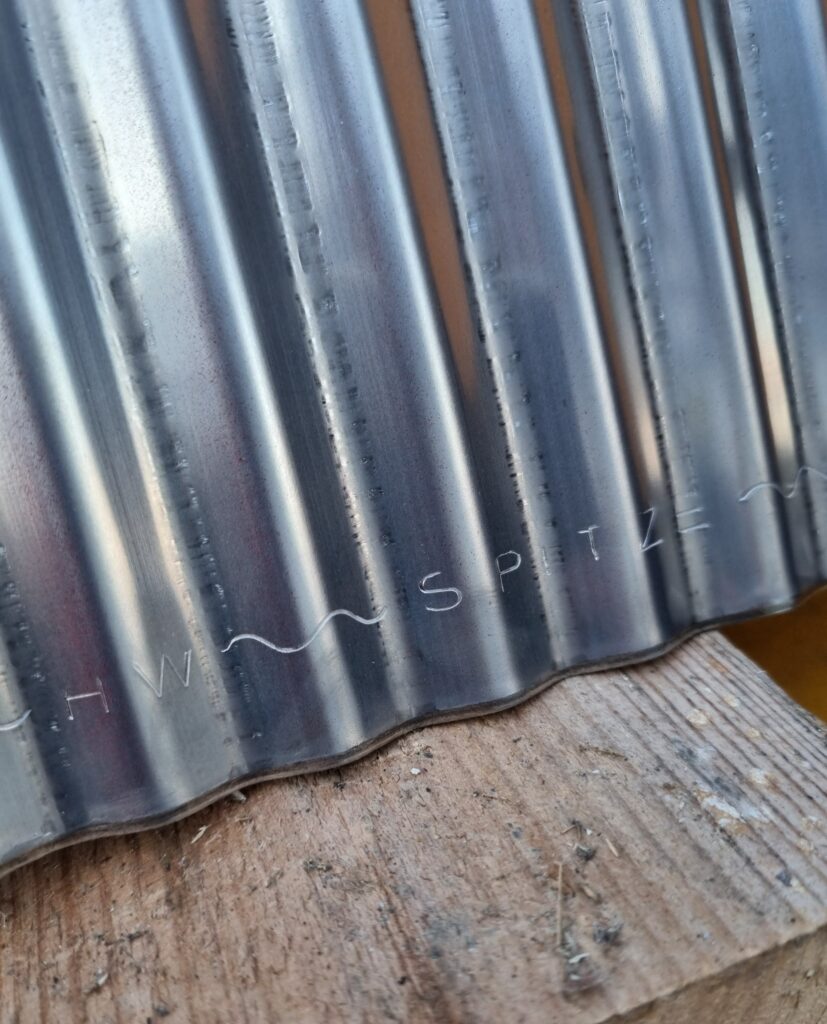
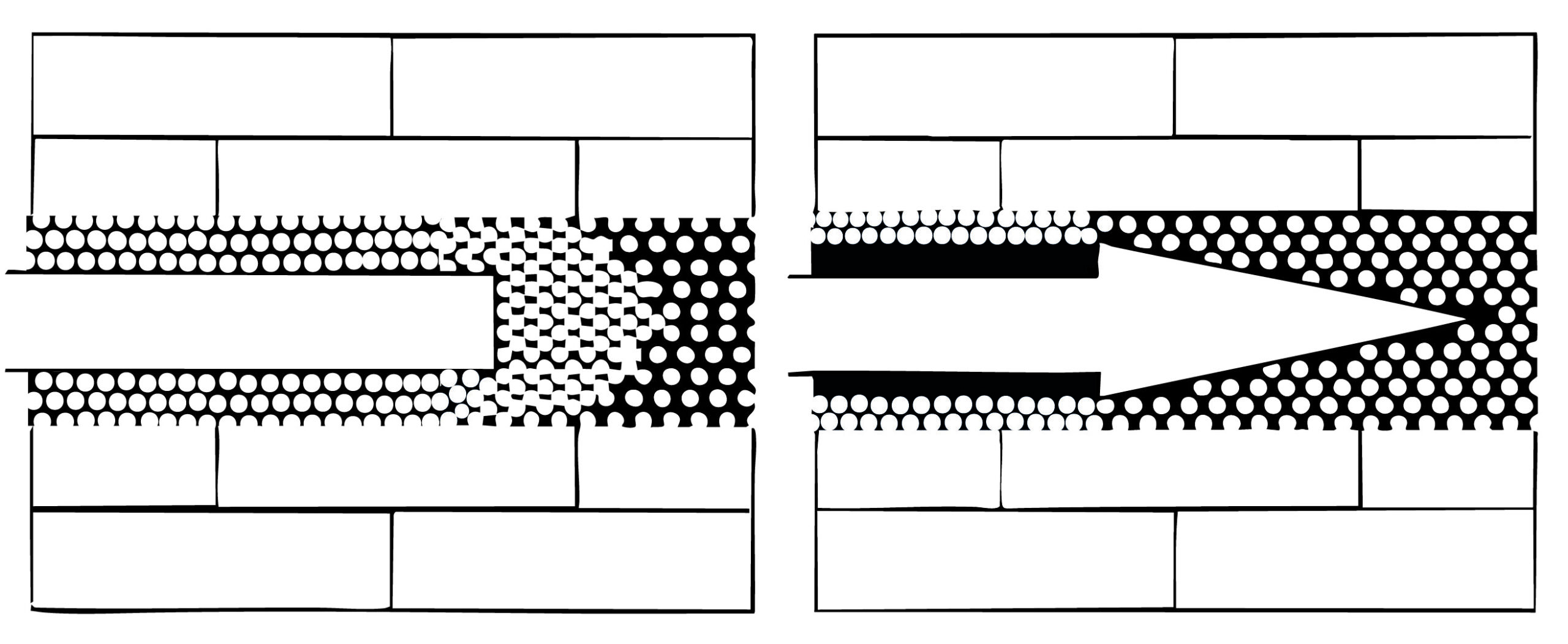
Die originale und patentierte HW-Edelstahlplatte verfügt über eine spezielle, pfeilspitzenartige Einschlagkante. Dadurch verringern sich Einschlagwiderstand, Flächenreibung und Erschütterungen beim Einbringen. Das Verfahren eignet sich dadurch auch für dickere Mauern bis zu 1 m, sofern eine durchgehende horizontale Lagerfuge vorhanden ist.

HW horizontal barrier tip close-up
On the left a conventional chrome steel plate, on the right a chrome steel plate from HW-Mauerrockenlegung with the HW tip.
Close-up of a horizontal barrier in a house wall
When

When is the chromium steel sheet process useful?

The chrome steel sheet method is useful if the moisture in the masonry is caused by capillary rising ground moisture. This is particularly common in older buildings.
Many old buildings were made of brick and are therefore particularly sensitive to rising damp. Due to the construction method used at the time, the waterproofing is usually missing completely or is no longer functional today.

Typical signs of damp walls are

  • Damp plinth areas
  • peeling plaster
  • Salt efflorescence
  • Dark damp edges
  • musty odor
  • Mold formation
  • Cold, clammy wall surfaces
Wall drying

HW wall drying

Vor der Ausführung muss geprüft werden, ob eine durchgehende horizontale Lagerfuge vorhanden ist. Diese ist Voraussetzung für das Einbringen der Edelstahlplatten. Unsere Partnerbetriebe übernehmen diese Prüfung natürlich zu Beginn und bauen im Anschluss die Horizontalsperre ein. Dabei erhalten Sie vorab alle wichtigen Informationen zu Ablauf, Umsetzung und möglichen Kosten.

Get in touch with us and we will put you in touch with a partner in your area. Or you can visit our partner page directly.

Advantages

Advantages of the chrome steel sheet process from HW

Das Original-HW-Chromstahlblechverfahren bietet eine dauerhafte Lösung gegen kapillar aufsteigende Feuchtigkeit. Die Edelstahlplatten bilden eine mechanisch stabile und unverrottbare Sperrschicht im Mauerwerk. Ihre Vorteile bei dieser Methode sind:

Mechanical lock

Special stainless steel plates are used in the HW process. As no chemical injection is used, this process is particularly environmentally friendly.

Just one work step

Cutting & sealing are carried out in just one work step. This saves you time and money. The work is always carried out by trained HW partners.

Gentle on the building fabric

Sealing is gentle on the wall: no drilling into the wall, no removal of masonry substance & reduced impact resistance.

Maintenance-free, versatile, durable

Stainless steel is particularly durable, which is why maintenance of the barrier is not necessary. Our method is also suitable for walls up to 1 m thick.

Or

Chrome steel sheet process or injection process?

Beim Injektionsverfahren werden chemische Stoffe über Bohrlöcher in das Mauerwerk eingebracht. Diese sollen die Kapillaren verschließen oder wasserabweisend machen. Die Wirkung dieser Injektion hängt jedoch stark von der Methodik, der Wahl des Injektagemittels, vom Mauerwerk, vom Durchfeuchtungsgrad, von Hohlräumen und von der gleichmäßigen Verteilung des Injektionsmittels ab.

The chromium steel sheet method, on the other hand, works differently: it forms a continuous mechanical barrier layer and physically prevents moisture from rising further. No chemical injection is therefore required here, which makes this method more environmentally friendly.

Wichtig ist dabei: Ein Injektionsverfahren beseitigt die Ursache für kapillar aufsteigende Feuchtigkeit nicht immer zuverlässig. Beim von uns entwickelten HW-Verfahren entsteht dagegen eine dauerhafte Edelstahlbarriere im Mauerwerk. Dadurch ist die Methode auch langfristig wirtschaftlich und hilft, spätere Kosten zu reduzieren.

Procedure

Procedure: How wall drying with HW works

Our partner companies in Germany, Austria and other European countries use our stainless steel plates and implement our patented HW process. We will put you in touch with one of our partners in your area. 

They proceed as follows when drying walls using the chrome steel sheet method:

Analysis & appraisal

First, the masonry is inspected on site by an HW partner company. This will determine the cause of the moisture and whether the HW process is technically suitable. You will receive initial information on the process, specific costs & possible remedial measures.

Inserting the panels

The stainless steel panels are then inserted into the continuous bed joint using the special HW impact device. The panels overlap and form a continuous horizontal barrier layer. It is then no longer possible for moisture to rise.

Drying & renovation

Nach dem Einbau wird der Feuchtigkeitsnachschub von unten unterbrochen. Das Mauerwerk oberhalb der Sperre kann trocknen. Je nach Schadensbild können ergänzende Maßnahmen wie die Putzsanierung erforderlich sein. Diesbezüglich erhalten Sie individuelle Informationen von unserem Partnerbetrieb.

Horizontal waterproofing in a basement
Is that

Is the chromium steel sheet process also suitable for cellars?

The method can also be used in basements if the technical requirements are met. The decisive factor is whether the moisture actually rises capillary from below and whether there is a continuous bed joint.

In basements, it is also necessary to check whether moisture is penetrating laterally from the ground. In this case, a horizontal barrier alone cannot eliminate all causes of moisture. An intact or supplementary vertical waterproofing may be required for basement waterproofing.

Specials

Spezielles Material für Küstengebiete und Mauerwerk mit hoher Salzbelastung

The HW process is also suitable for coastal areas and the special climatic conditions in these regions. For demanding environments, HW uses CrNiMo sheets made of chrome-nickel-molybdenum stainless steel. This material is particularly suitable for structures exposed to salt, such as in coastal areas.

Durch den Molybdänanteil sind die Platten besonders korrosionsbeständig gegenüber chlorid- und halogenhaltigen Medien. Das macht sie, im Vergleich zu herkömmlichen Edelstählen, deutlich widerstandsfähiger gegen Loch- und Spaltkorrosion.

Dry

HW wall drying: Dry walls for over 50 years

HW wall drying ist Erfinder des einzigen einstufigen Verfahrens zur mechanischen Trockenlegung sowie der dazu benötigten Edelstahlplatten.

Die praktische Ausführung erfolgt durch geschulte Partnerbetriebe in Deutschland, Österreich und weiteren europäischen Ländern.

For over 50 years, HW has stood for mechanical wall drying with technical precision, durable materials and professional implementation. The aim is to provide a durable, maintenance-free solution against capillary rising damp that is gentle on the building fabric.

Patented stainless steel horizontal barrier

Our specially developed HW horizontal barrier was designed for permanent mechanical sealing against capillary rising damp. The process is even suitable for solid masonry with wall thicknesses of up to 1 m.

50 years of experience

For more than 50 years, we have been involved in the development and optimization of mechanical drainage systems without chemical injection. This technical know-how is continuously incorporated into our products and methods.

Professional execution

Our partner companies receive specific training and work according to the specifications of the HW system. This enables us to guarantee professional, reliable and substance-friendly implementation directly on site.

Permanent solution with guarantee

The HW horizontal barrier forms a durable, maintenance-free barrier layer made of stainless steel. The process is carried out in just one step and ensures long-term interruption of capillary moisture rise.

Transparent costs

A detailed assessment of the masonry is carried out before work begins. Our partners provide transparent information about technical options, the work process and the expected costs.

Now

Have the chrome steel sheet process tested now

Do you have damp walls, salt efflorescence or mold in the building? Then the cause should be professionally investigated. If there is capillary rising damp, the HW chrome steel sheet method is a permanent solution for drying out walls.

Contact us - we will inform you about the method, answer your questions and put you in touch with a qualified HW partner company in your area.

en_US